How the complicated industrial legacy and unique culture of The Interline’s home city, combined with a new emphasis on technology, made 2025 the right year to resurrect its fashion week.
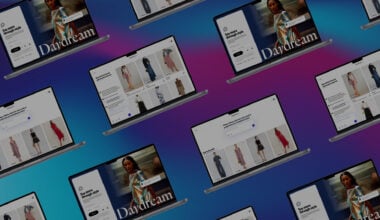
Consumers are surrounded by chatboxes, all promising proactive, personalised advice on what to buy, and where. But it’s unclear how general purpose AI models really “shop,” how they gather data about products, and how much they really understand user intent. I talk to Maria Belousova, CTO at Daydream, about the technical and cultural components of teaching AI the vocabulary of fashion.
We take it as read that fashion and gaming are growing closer together, but what’s the quantifiable value of branded experiences and where do they sit on balance sheets? What’s the outlook for selling cosmetic items? And what does it mean for tightly-controlled brand narratives to live alongside user-generated content?
Exploring where the integration of technology into fashion (and vice versa) is headed, especially in the context of historic land-grabs from big tech and AI labs for people’s personal data.
Tackling some of the thorny language, and the open spaces, between the previous vision for digital fashion, and a more practical short-term reality, with the Founder of Digital Fashion Week.
After being dominated by digital product creation strategies, the cutting edge of design and development workflows is feeling the pull of artificial intelligence - and big questions are being asked about where the line gets drawn. Sean Lane, Director of Digital Innovation And AI at Vans joins the show to debate them.
Ahead of the launch of this year’s upcoming DPC Report, our Editor looks back at Europe’s largest gathering of CLO users and considers some of the key takeaways for the extended 3D / digital product creation community.
A grounded perspective on environmental tipping points, the reality of recycling, and the gap between fashion’s linear growth economy and the vision for a viable circular alternative.
A timely debate with a leading name in the 3D community, covering everything from standardisation as a necessary precondition for automation, to the uncertain disruption that AI is potentially bringing to digital product creation - all through the prism of what one person’s journey can teach fashion professionals in general.
From transparency and take-back to 3D technology, Nick Reed, Founder of Neem London, talks about the practicalities of building a slow fashion business - and the need for great product to be at the front of it all.
What actually is an AI agent? How do they work? What might they mean for fashion? And what does the agentic future hold for the people who currently make the industry what it is?
More value is still to come from DPC strategies through cultural and process transformation - without challenging the current limits of the solutions. But the big unlocks afterwards will likely need to be driven by technology.
What does the near future hold now that AI is no longer seen in binary terms as a saviour or a threat, but more pragmatically, as a spectrum of solutions? Will the core business models balance out? And will the architecture scale to deliver the transformative applications that users, organisations, and investors are anticipating?